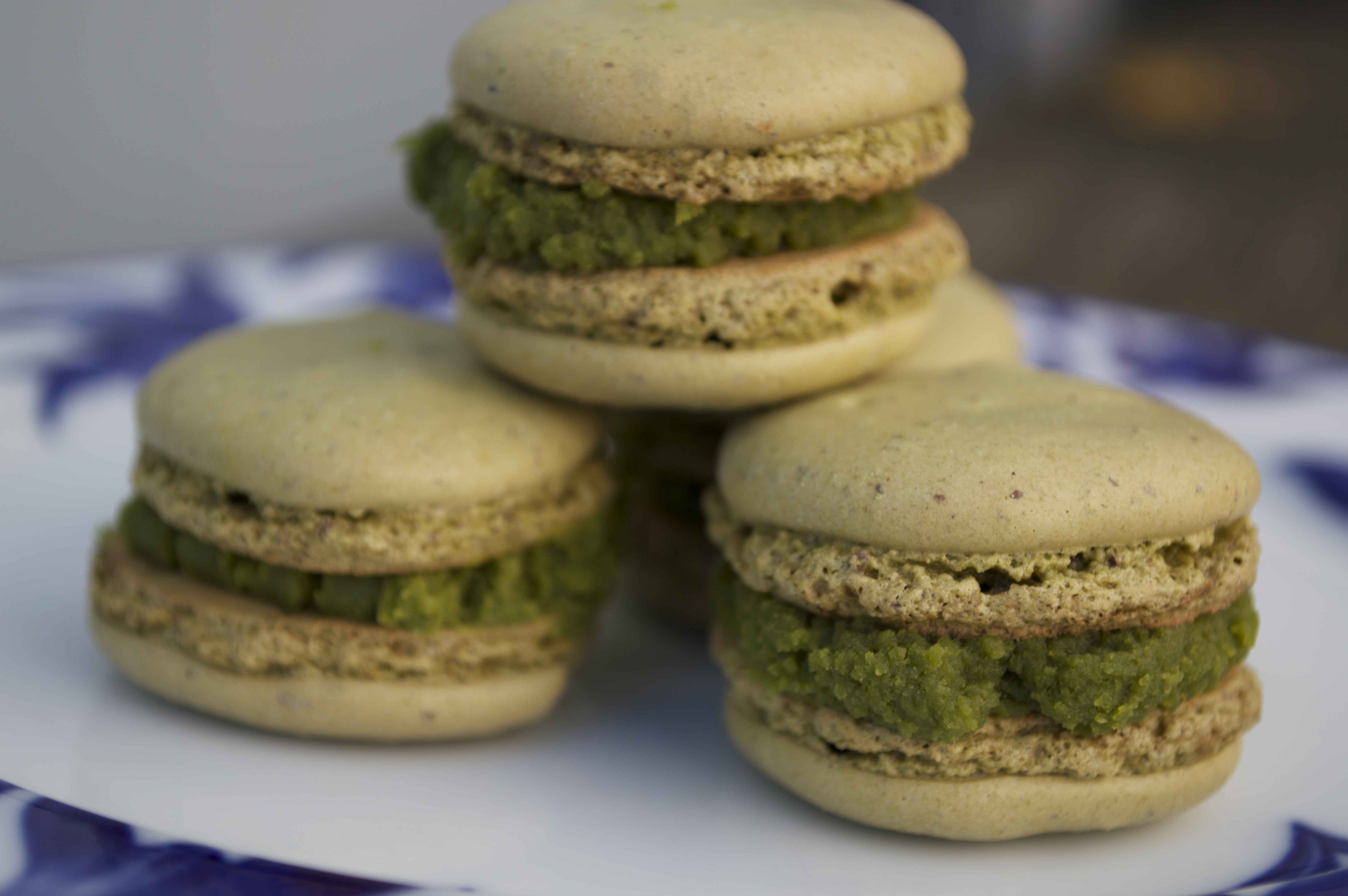
 The first time I saw macarons, I knew we were meant to be. I remember gaping at the colorful display in the window of a patisserie on a family trip to Paris when I was eight or nine, wondering what these little tidbits, almost too beautiful to be food, could be. With no comman
d of the language and no control over our tour group’s itinerary (ever seen those tour groups that travel by giant buses, disembarking to gobble up tourist attractions in 30-minute intervals? Yeah, that was us), I didn’t get the chance to find out.
Then, many years later, like star-crossed lovers, the macaron and I again encountered one another, this time, at my (at the time future) in-laws’. Someone had sent my mother-in-law a box of them from an expensive New York patisserie as a present. At long last, I took my first bite of this beautiful, illusive morsel… and was terribly, terribly underwhelmed. Dry, chalky and one-noted in its flavor, it fell far short of what I had imagined.
Despite my disappointment, I knew that the macaron could, at least in theory, be far more. Thus began my quest to capture the Platonic ideal of the macaron: a sandwich cookie with shells sturdy enough to withhold assembly, yet tender enough to melt in your mouth, holding a filling that’s assertive enough to impart an interesting flavor, but not so sweet that it turns the whole endeavor into a cloying sugar-fest.
Below is a recipe for one of my favorite iterations of this cookie so far. Matcha, or Japanese ceremonial green tea powder, provides a deep flavor and a little bit of bitterness to balance out the sweetness. To boot, it also provides great color with no added moisture.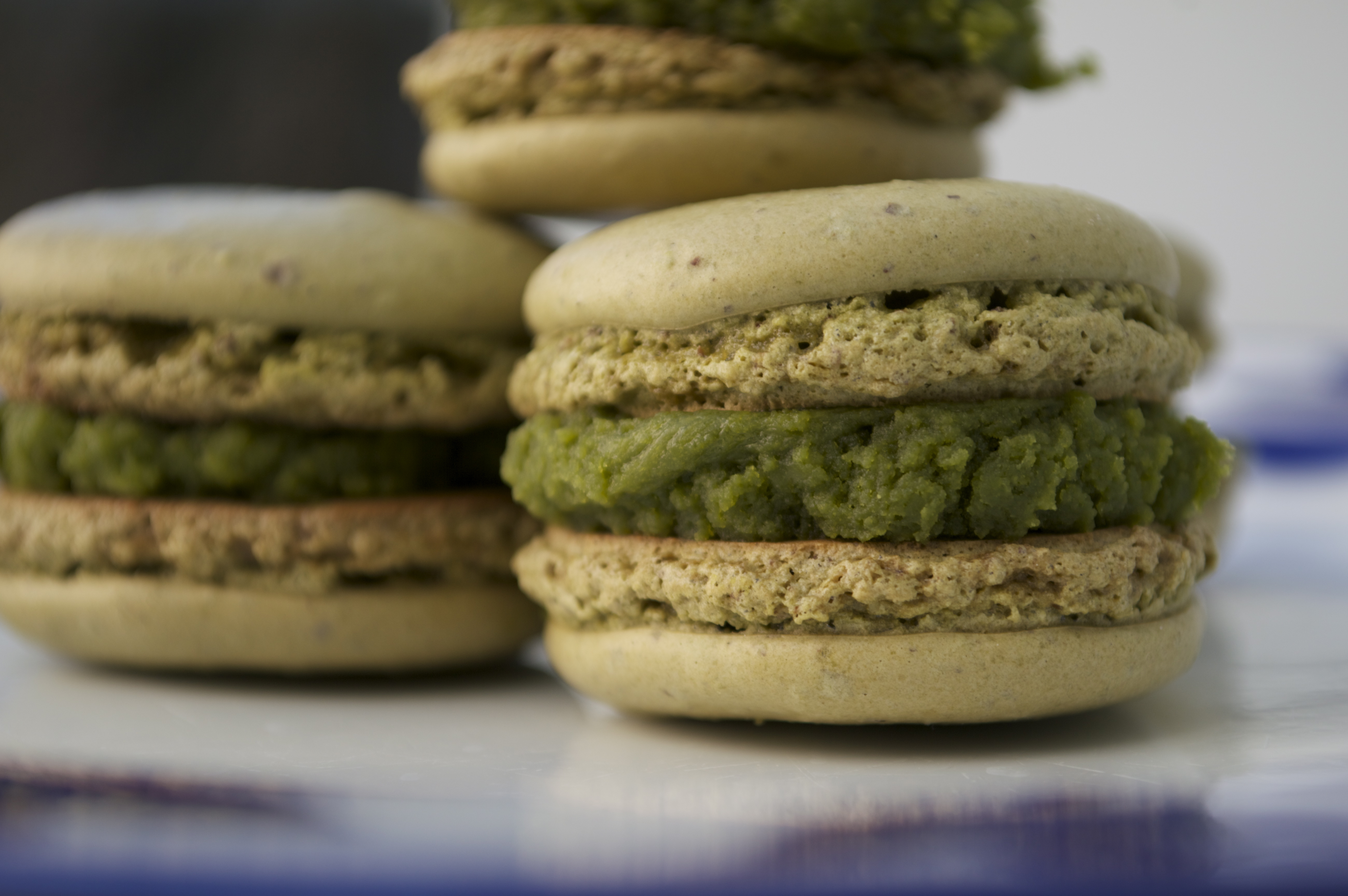
While we’re on the subject of moisture, it’s important to note that letting your cookies dry before baking them is key. I kept skipping this at first, and kept ending up with cracked shells. Turns out that letting a skin develop on top of your shells before baking them is key to protecting their facades and creating their “feet,” that signature ruffle that forms around the base of macarons when they rise correctly (i.e. from the bottom). That said, even if your macarons do crack, who cares as long as they are delicious?
Matcha Macarons
Makes about 2 dozens
Ingredients:
Macarons
1 cup powdered sugar
1/2 cup ground almonds
1 tbs matcha powder
2 large egg whites – room temp.
5 tbs granulated sugar
matcha swiss buttercream
1 egg white
1/4 cup granulated sugar
1/4 lbs (1 stick unsalted butter), room temp
pinch salt
1 tbs matcha powder
 A quick note on the almonds: I usually grind my own, starting from whole almonds. The result should be reasonably fine. If the ground almonds seem damp, dry them at low temperature in the oven.
Line two baking sheets with parchment paper. I prefer not to use silicon baking sheets for this, since you want to know if the macarons are sticking. To make piping easier, mark out where the cookies will go on the parchment paper by dipping a 2 inch diameter cookie cutter in some flour and stamping it onto the parchment (you can also draw around the cutter with a pencil and turn the paper over too).
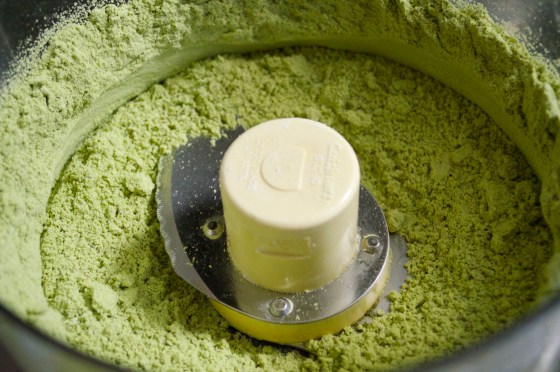
Pulse the ground almonds with the powdered sugar and matcha powder to get rid of any remaining chunks and clumps. At this point, you can sift the mixture to remove and regrind the bigger pieces of almond if you are so inclined and have, oh, you know, an extra hour or two on your hands. If not, then a reasonable level of fineness is totally ok.
In a stand mixer, start whipping the egg whites and salt on medium until foamy. Add the granulated sugar slowly as you continue to whip the egg whites until stiff peaks form. The result should be a glossy, stiff meringue.
Then, the macaronage: fold about a third of the meringue into the sugar-almond mixture, then fold that mixture into the rest of the meringue. Continue folding until no white streaks remain. The mixture should have the texture resembling lava: just fluid enough that a ribbon drizzled back into the bowl slowly sinks into the rest mixture. Be careful not to over mix, or your macarons won’t hold their shapes or rise; towards the end, I usually do the drizzle check in between every stroke or so.
Transfer your mixture into a pastry bag with a round tip (or use a ziplock bag with one corner snipped). Pipe the batter onto your prepped baking sheets in circles. If you have achieved proper macaronage, your batter will spread itself out into smooth, flat rounds instead of maintaining that piped shape. Leave the trays of piped cookies out to dry for at least 30 minutes or until a sheer skin forms on top of the cookies.
Preheat your oven to 325F and start your swiss buttercream.
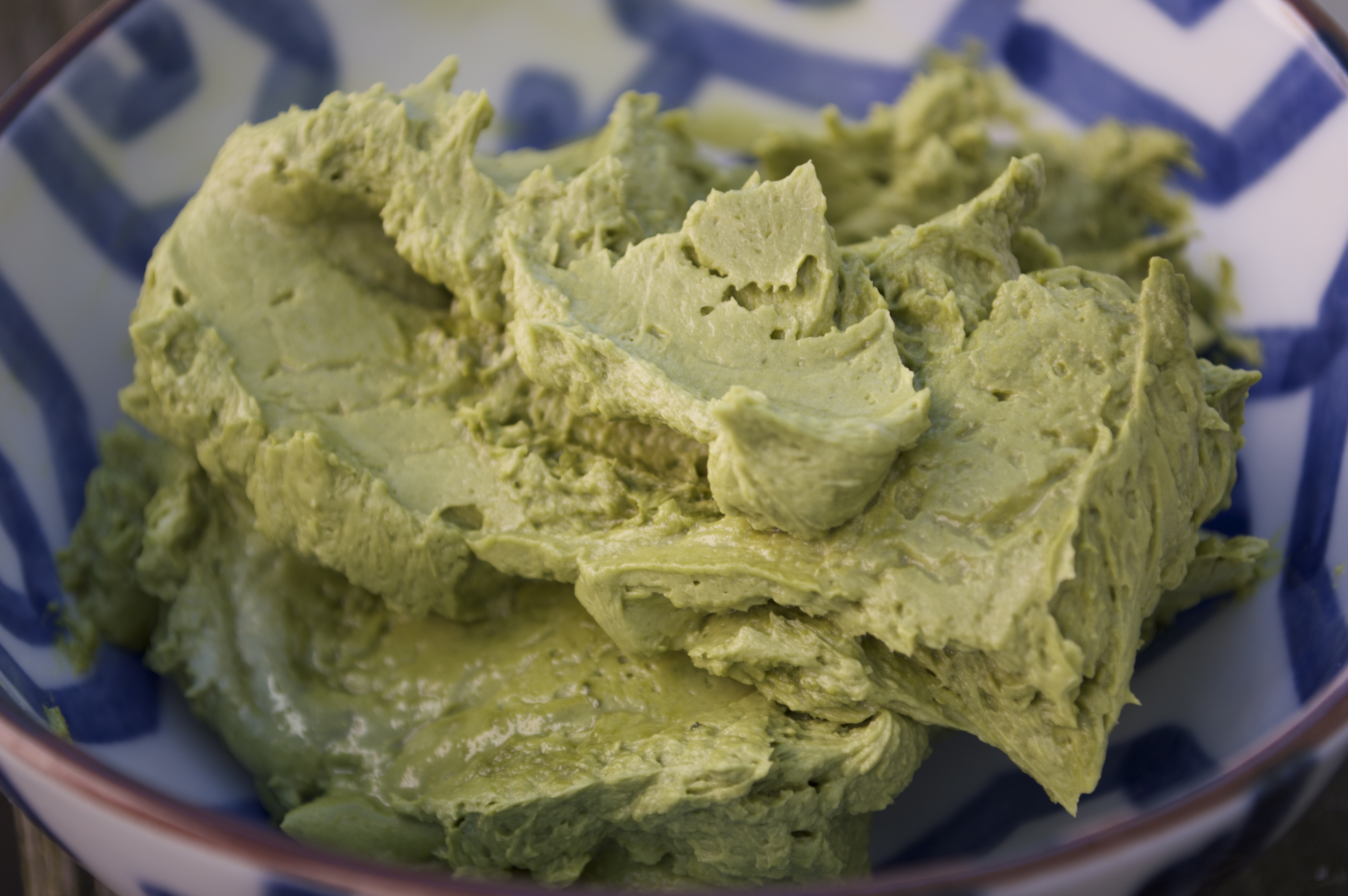 In a heat proof bowl set over a pot of simmering water (the water shouldn’t be touching the bowl), whisk together the egg white and sugar until the mixture is warm and the sugar is completely dissolved. With a stand mixer, whip the mixture until stiff, glossy peaks form and the bowl is cool. Add the matcha and salt, then the butter, about a tablespoon at a time, and continue to mix until all the ingredients are incorporated. Transfer buttercream to a piping bag (or ziplock bag) and set aside. Swiss buttercream keeps for about a week in the fridge, so you can make it ahead of time, if you’d like.
Now it’s time to bake the cookies: before sliding the sheets into the oven, make sure to give them a few raps on your counter top to chase out any remaining air bubbles. Bake the cookies for about 15 minutes or until the cookies peel easily off the parchment. If they are stuck, bung ’em back in the oven for a couple minutes until done. Remove the cookies from the sheet tray and let them cool on a rack.
Once the cookies are completely cooled (warm shells will melt the buttercream and leave you with a gloopy, runny mess – not good), fill and assemble them. The buttercream will pipe more easily when it’s closer to room temperature.
Your macarons can be stored in the fridge for 2-3 days.
 The Domestic Pig
These look amazing! I can’t wait to give it a try. I love macarons but they’re usually pretty expensive. Thank you for sharing your recipe!
Hi Andrea! Thanks for stopping by. Totally agree about buying macarons – that’s why I love to make them myself!
Love the color and presentation…
Thank you!