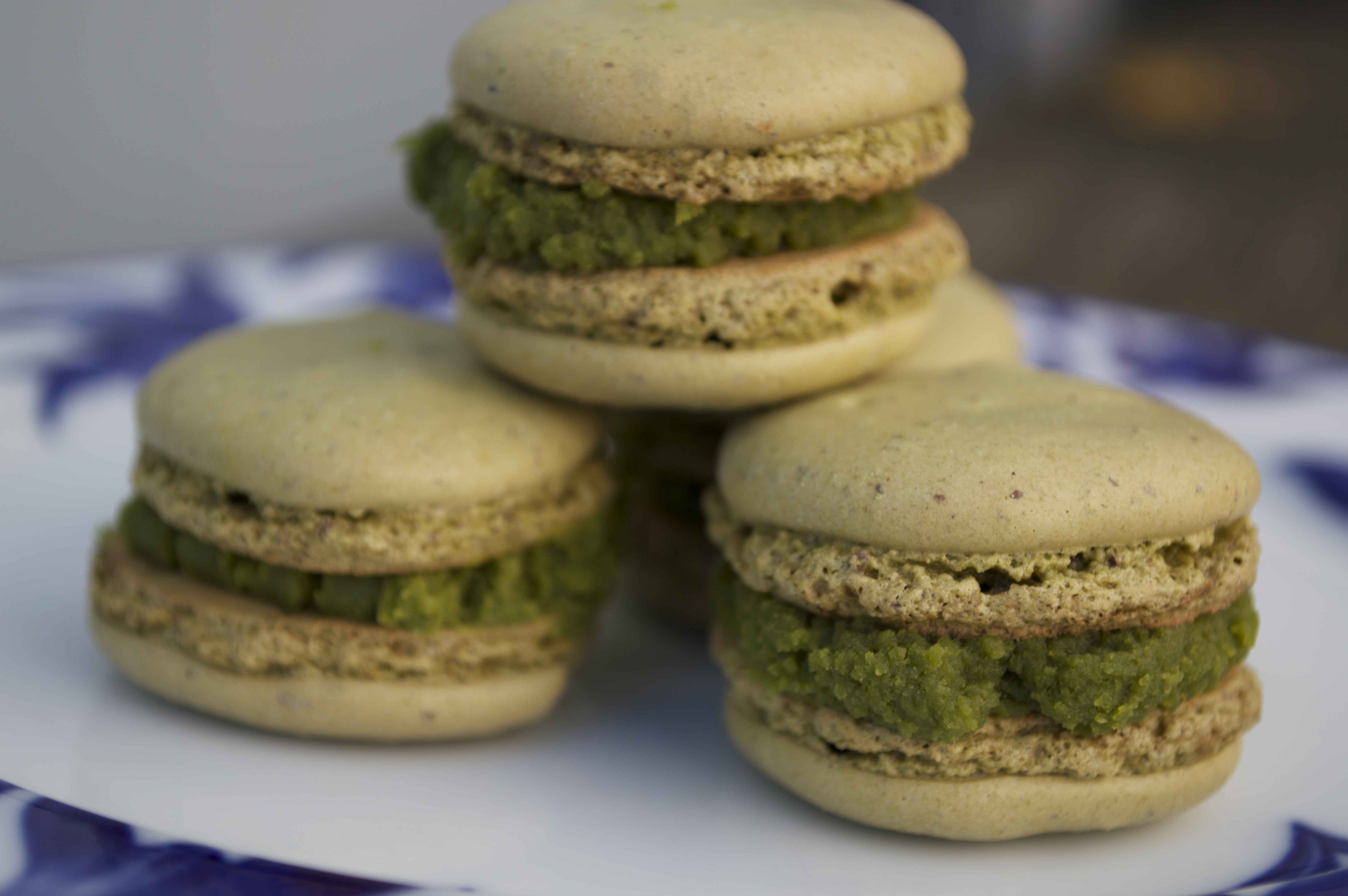
 The first time I saw macarons, I knew we were meant to be. I remember gaping at the colorful display in the window of a patisserie on a family trip to Paris when I was eight or nine, wondering what these little tidbits, almost too beautiful to be food, could be. With no comman
d of the language and no control over our tour group’s itinerary (ever seen those tour groups that travel by giant buses, disembarking to gobble up tourist attractions in 30-minute intervals? Yeah, that was us), I didn’t get the chance to find out.
Then, many years later, like star-crossed lovers, the macaron and I again encountered one another, this time, at my (at the time future) in-laws’. Someone had sent my mother-in-law a box of them from an expensive New York patisserie as a present. At long last, I took my first bite of this beautiful, illusive morsel… and was terribly, terribly underwhelmed. Dry, chalky and one-noted in its flavor, it fell far short of what I had imagined.
Despite my disappointment, I knew that the macaron could, at least in theory, be far more. Thus began my quest to capture the Platonic ideal of the macaron: a sandwich cookie with shells sturdy enough to withhold assembly, yet tender enough to melt in your mouth, holding a filling that’s assertive enough to impart an interesting flavor, but not so sweet that it turns the whole endeavor into a cloying sugar-fest.
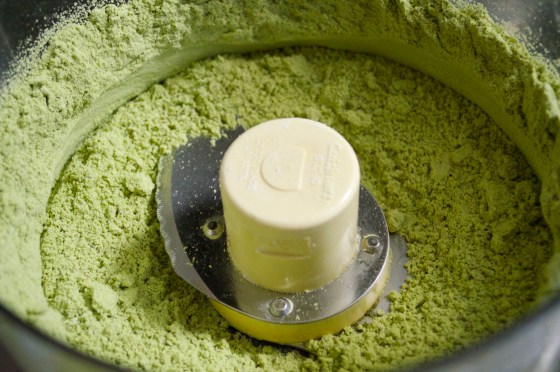
Below is a recipe for one of my favorite iterations of this cookie so far. Matcha, or Japanese ceremonial green tea powder, provides a deep flavor and a little bit of bitterness to balance out the sweetness. To boot, it also provides great color with no added moisture.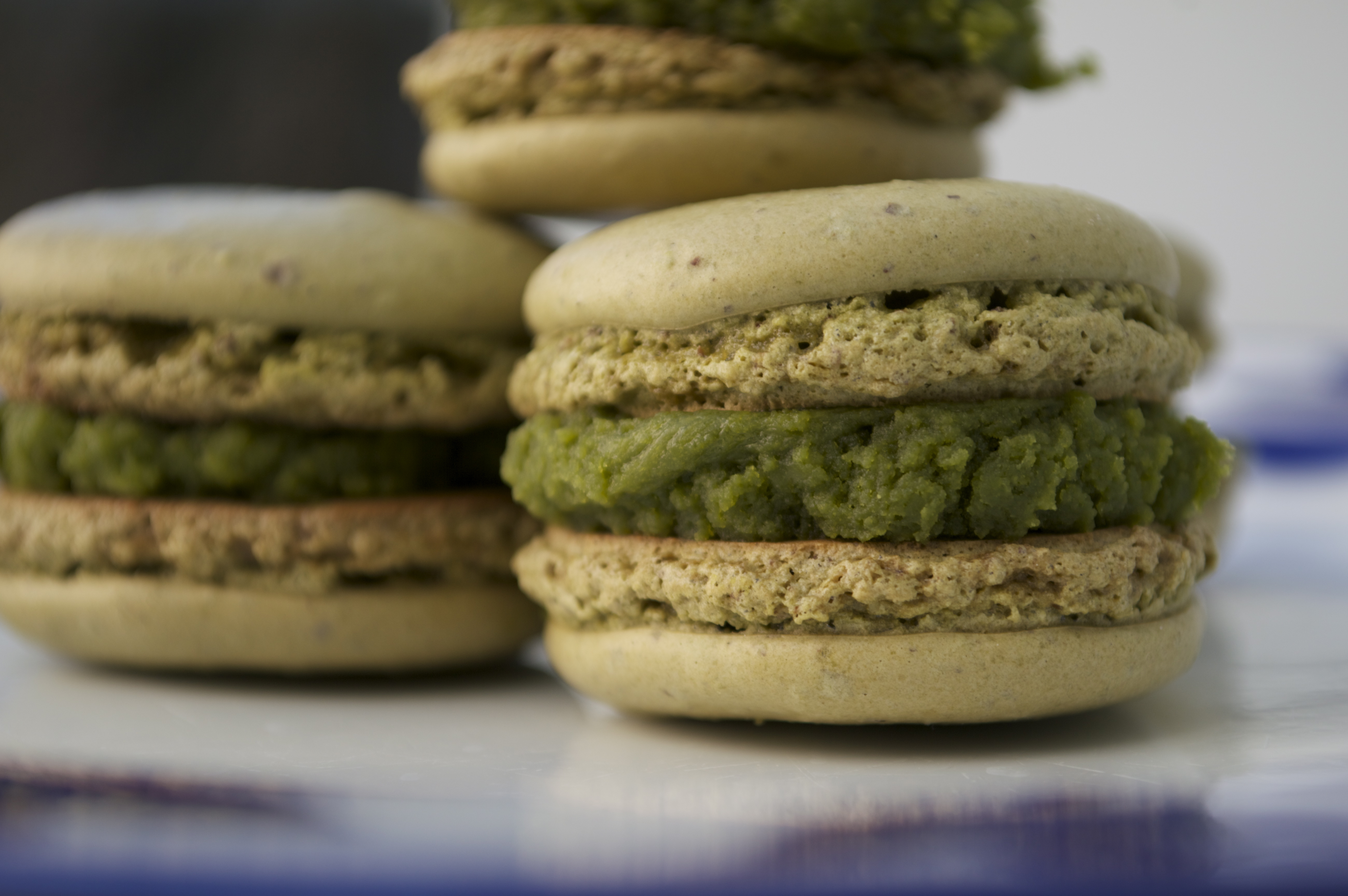
While we’re on the subject of moisture, it’s important to note that letting your cookies dry before baking them is key. I kept skipping this at first, and kept ending up with cracked shells. Turns out that letting a skin develop on top of your shells before baking them is key to protecting their facades and creating their “feet,” that signature ruffle that forms around the base of macarons when they rise correctly (i.e. from the bottom). That said, even if your macarons do crack, who cares as long as they are delicious?
 The Domestic Pig